Home Insulation in Valparaiso & How to Choose the Right Type
Home Insulation for Valparaiso Properties
Winters here are hard on a house. Before you pick an insulation product, it helps to know what your home is made of and where it's losing heat. Valparaiso has older homes near downtown, newer subdivisions on the edge of town and plenty of pole barns out on the rural lots. They all lose heat in different ways, so a good contractor won't sell the same product on every job.
If your upstairs bedroom is always the coldest room and your heating bill jumps every January no matter where you set the thermostat, the insulation in your attic or walls is probably falling short. The right fix depends on what's up there now.
Why Valparaiso Homes Lose Heat in Winter
We get long stretches below freezing, lake-effect snow and steady wind across the farmland around town. Cold and wind find every gap in a house. In older homes the attic insulation has usually settled and compressed over the years. In newer homes the leaks tend to be around recessed lights, attic hatches and pipe openings, even when the insulation looks deep enough.
These are the spots we find most often:
Attic floors with less than 10 inches of insulation
Unsealed top plates and wiring holes
Rim joists in unfinished basements
Bonus rooms over garages
Air leaks matter as much as R-value, so we seal the attic first and insulate second.
Spray Foam, Fiberglass Batt and Attic Retrofits
Spray foam can be the right answer for a damp crawl space. A simple attic top-up is often plenty for a newer home with solid framing. Here's how the main options compare.
Option | Best for | Main advantage |
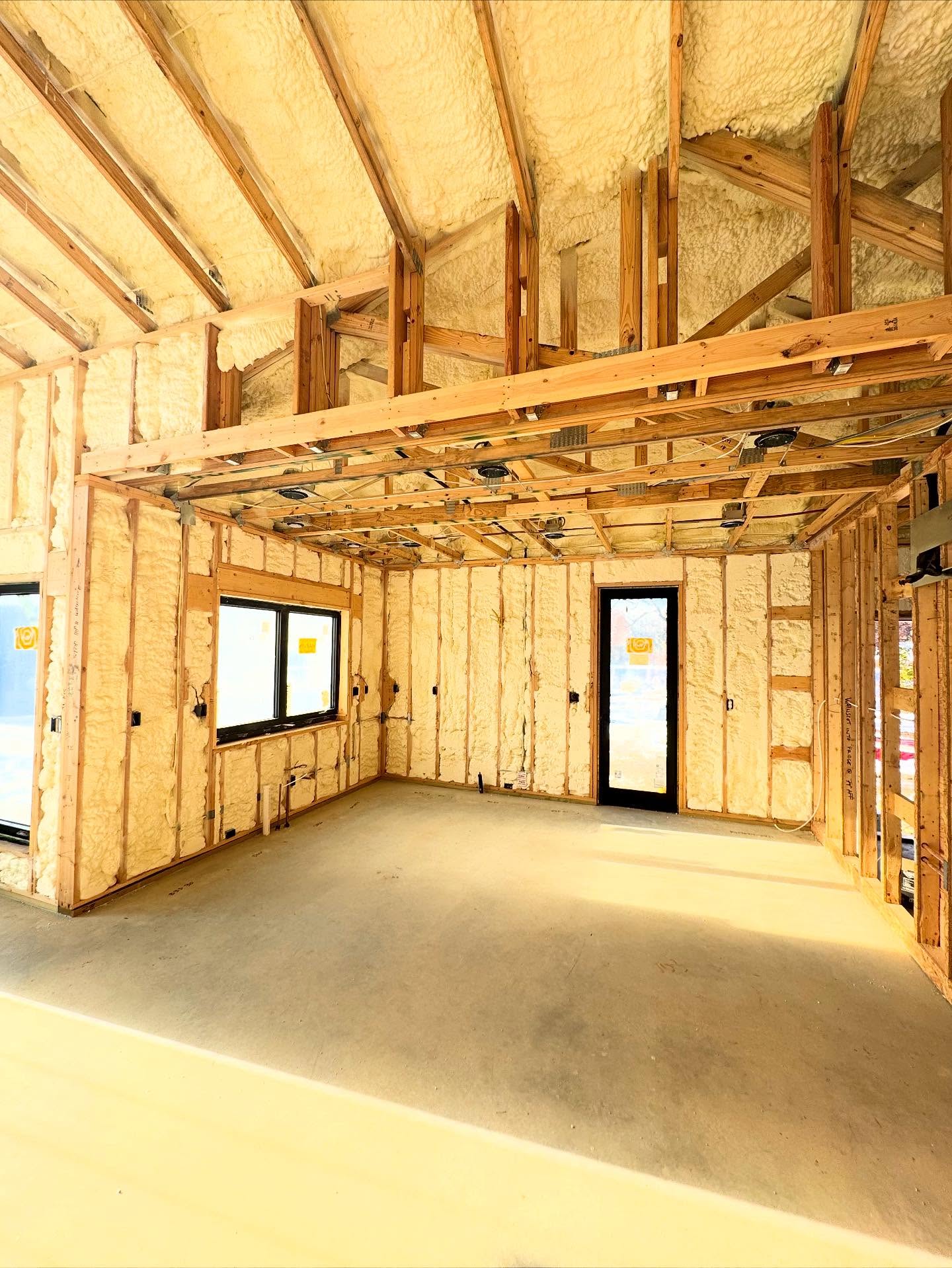
Open cell spray foam | Attic rooflines, interior walls | Seals air gaps and absorbs sound |
Closed cell spray foam | Crawl spaces, rim joists, pole barns | High R-value per inch and moisture resistance |
New construction, open wall cavities | Affordable and easy to inspect | |
Attic retrofit | Existing homes with thin attic insulation | Adds depth and air sealing without a full tear-out |
A lot of the homes we work on end up with closed cell foam on the rim joists and blown insulation in the attic.
Open Cell vs Closed Cell Spray Foam
People ask us about this more than anything else.
Open cell foam is light and soft. It expands to fill odd-shaped cavities, seals air leaks and cuts down on noise, which is why it works well on attic rooflines and interior walls.
Closed cell foam is denser and more rigid. You get roughly R-6 to R-7 per inch, it blocks moisture and it adds some strength to the structure. We usually reach for it in crawl spaces, rim joists and metal buildings.
Which one is right comes down to moisture, how much cavity depth you have and how you use the space.
Signs Your Attic Needs Attention
Most people don't think about their attic until something goes wrong somewhere else in the house. Pop the hatch and take a look. Here's what to watch for:
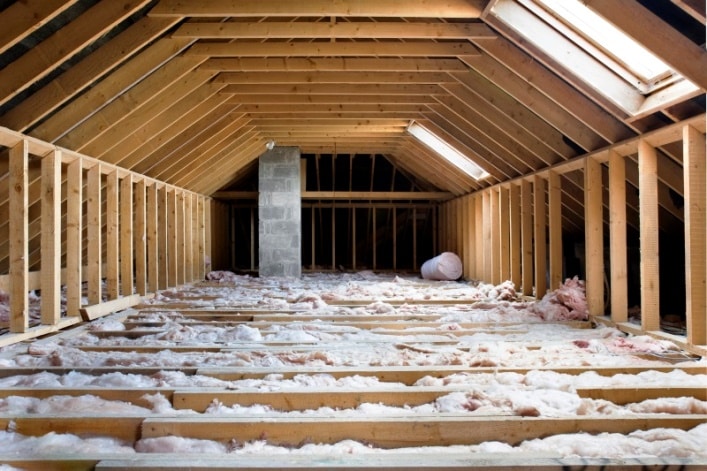
You can see the tops of the ceiling joists
The insulation looks gray, flattened or uneven
Ice dams build up along the roof edge after snow
Upstairs rooms run hot in summer and cold in winter
You find rodent droppings or water stains in the insulation
If the old material is damaged or contaminated, it needs to come out before anything new goes in. If it's still in decent shape, an attic retrofit that adds depth and seals the leaks is usually the best value for an existing home.
Insulating Pole Barns and Metal Buildings
The rural edges of Valparaiso are full of pole barns, workshops and steel commercial buildings. Bare steel sweats. Warm air inside hits the cold metal and the water drips onto your tools, trucks and anything you've got stored.
Metal building insulation puts a continuous barrier between the steel and the air inside. We often use closed cell spray foam because it bonds right to the panels, stiffens them and stops moisture at the surface. If you plan to heat a shop or keep anything that rusts or goes moldy, it's much easier to insulate before the first hard winter than to deal with corrosion later.
What Insulation Costs in Valparaiso
Here are typical installed costs for professional work in Indiana.
Service | Typical installed cost |
Blown-in or batt attic insulation | $1.00 to $3.90 per sq ft |
Spray foam insulation | $2.00 to $5.00 per sq ft |
Insulation removal | $1.25 to $2.50 per sq ft |
Attic size, access, what's already there and your target R-value all change the final number. Closed cell foam and tight, hard-to-reach spaces usually land at the higher end. These are general ranges, not a quote. We'll give you a real price once we've seen the job.
Common Questions About Home Insulation Services in the Area
How much insulation does a Valparaiso attic need?
The U.S. Department of Energy recommends R-49 to R-60 for Northwest Indiana. With blown fiberglass that's roughly 19 to 24 inches deep. Plenty of older homes here have half that or less.
Is spray foam worth it in an older home?
Often it is. It seals leaks that batts and blown-in products leave open, and older homes with uneven framing have plenty of those. It costs more up front, so we usually put it where it counts most, like rim joists, crawl spaces and rooflines.
Can new insulation go over old insulation?
If the old material is dry, clean and free of pests, usually yes. Wet, moldy or rodent-damaged insulation has to come out first.
How long does an attic insulation job take?
Most home attics are done in a day. Bigger houses, spray foam jobs and anything that needs removal first can take two to three days.
Do you work outside Valparaiso?
Yes. Eclipse Insulation serves Porter and Lake Counties, including Portage, Chesterton, Hobart, Merrillville, Crown Point, Winfield and Lakes of the Four Seasons. We also work in LaPorte and South Bend.
Schedule an Insulation Assessment
Eclipse Insulation is a locally owned insulation contractor in Valparaiso. We work with homeowners, builders and businesses across Northwest Indiana.
We'll look at your attic, walls, crawl space or metal building, tell you what we see in plain terms and suggest only what the property needs. That might be an attic top-up, a full spray foam package or pulling out old material first. You'll know your options and the price before any work starts.
If you'd like someone to take a look, call us at (219) 200-2307 or reach out online.

