
Open Cell vs Closed Cell Spray Foam, Which One Do You Need
Open Cell vs Closed Cell Spray Foam and Which One Your Northwest Indiana Home Needs
Open cell spray foam and closed cell spray foam come out of the same truck and do remarkably different jobs, which is why Northwest Indiana homeowners so often get quoted for one when they needed the other. The labels sound like a minor technical distinction. They are not.
One is light, flexible, and excellent at stopping sound. The other is dense, rigid, and resists water. Pick by price alone and you may end up with soft foam in a wet crawl space or expensive foam in an attic that never needed it. So how do you tell which one your house is actually asking for?
What Open Cell Spray Foam Is and Where It Performs Best
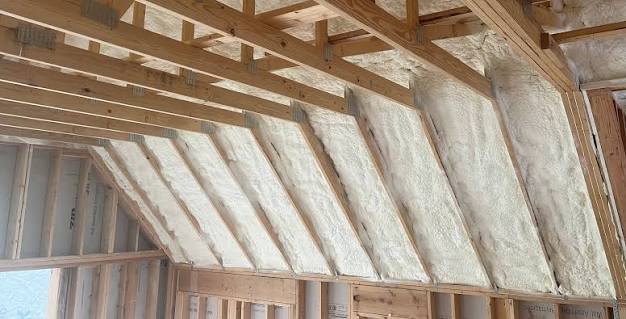
Open cell spray foam insulation expands to roughly 100 times its liquid volume, creating a soft, sponge-like material with an R-value near 3.5 to 4.0 per inch. It is vapor permeable, meaning moisture can move through it rather than getting trapped behind it.
Where does it shine? Attics with generous headroom, interior walls, and anywhere sound control matters. Open cell deadens noise far better than dense foam or fiberglass batt insulation, which makes it popular for media rooms, nurseries, and shared walls.
Where generous depth is available, open cell reaches the same total R-value as dense foam, simply by going thicker.
What Closed Cell Spray Foam Is and Where It Performs Best
Closed cell spray foam insulation expands far less and cures into a rigid, dense panel with an R-value of 7.0 to 7.5 per inch. The cells stay sealed, which is what makes it a water barrier rather than merely a water-tolerant material.
That density buys three things open cell cannot. It blocks vapor. It adds rigidity to walls and roof decks. It reaches high R-value in half the depth, which matters wherever space is tight.
This is why closed cell spray foam for crawl spaces and below-grade applications is close to an industry default in Northwest Indiana. Water is the deciding factor, not preference.
Open Cell vs Closed Cell Spray Foam Side by Side
Side by side, the differences stop being abstract.
Factor | Open cell | Closed cell |
R-value per inch | 3.5 to 4.0 | 7.0 to 7.5 |
Density | Light and flexible | Rigid and dense |
Vapor barrier | No | Yes |
Sound dampening | Excellent | Moderate |
Adds structural strength | No | Yes |
Typical use | Attics, interior walls | Crawl spaces, rim joists, metal building insulation |
Does higher R-value per inch automatically mean better? Not where you have room to spray deep. An attic with 14 inches of clearance can reach the same performance either way, which turns the decision into a question of moisture, space, and sound rather than raw numbers.
Which Spray Foam Is Best for an Attic in Northwest Indiana
Most Northwest Indiana attics do well with open cell, provided the roofline has depth and the existing material is sound. Check the signs your attic insulation is failing before choosing a product, because a contaminated attic changes the plan entirely.
Closed cell earns its place in attics with low clearance, cathedral ceilings, or a history of ice damming. It also suits unvented roof assemblies where vapor control is part of the design.
An attic insulation retrofit works when existing insulation is clean and dry. When it is not, the question becomes retrofit or full insulation replacement, and planning attic retrofit costs starts there.
Which Spray Foam Works Best in Crawl Spaces Basements and Rim Joists
Below grade, the answer is rarely close. Closed cell goes in crawl spaces, basement walls, and rim joists because those assemblies deal with ground moisture year round, and open cell would simply let that moisture pass through.
Rim joists are the clearest case. They are narrow, they leak air badly, and they sit directly above a cold foundation. Dense foam seals and insulates in one pass where nothing else fits.
Homeowners often ask whether the softer product works below grade if budget is tight. Reviewing what open cell spray foam costs helps with attic planning, but a wet crawl space is not the place to economize.
Compare Open Cell and Closed Cell Spray Foam with Eclipse Insulation
The right answer depends on your building, not on a blog. Eclipse Insulation assesses attics, crawl spaces, and walls across Northwest Indiana, then recommends open cell spray foam or closed cell spray foam based on what we find.
We work throughout Northwest Indiana, including • Valparaiso • Chesterton • Laporte • Merrillville • South Bend • Crown Point • Portage • Cedar Lake • Munster • Hobart
Our team measures available depth, checks moisture conditions, and explains the trade-offs before anything gets sprayed. If one product suits your project better, we will say which and why.
Call (219) 200-2307 or request your free assessment online. No guessing, and no product pushed because it was on the truck.
Which is better, open cell or closed cell spray foam?
Neither is universally better, since they solve different problems. Open cell suits attics and interior walls with room to spray deep, while closed cell belongs anywhere moisture or limited space is involved.
Can open cell spray foam be used in a crawl space?
It is not recommended, because open cell is vapor permeable and crawl spaces sit against constantly damp soil. Closed cell spray foam for crawl spaces is the standard below-grade choice for that reason.
How much R-value does spray foam add per inch?
Open cell delivers roughly 3.5 to 4.0 per inch and closed cell delivers 7.0 to 7.5. Depth available in the cavity usually matters more than the per-inch figure.
Which spray foam is better for soundproofing?
Open cell is significantly better at dampening sound because its softer structure absorbs sound waves rather than reflecting them. Closed cell blocks some noise but was never designed as an acoustic material.
Where does Eclipse Insulation install spray foam?
We work throughout Northwest Indiana, including Valparaiso, Chesterton, LaPorte, Merrillville, Crown Point, South Bend, Portage, Cedar Lake, Munster, and Hobart.

